2026-05-11
Operationalizing ML in Enterprise: Start With the Outcome, Not the Model
Reflections inspired by Eric Siegel’s Predictive Analytics on why enterprise ML should be designed backward from business outcomes.
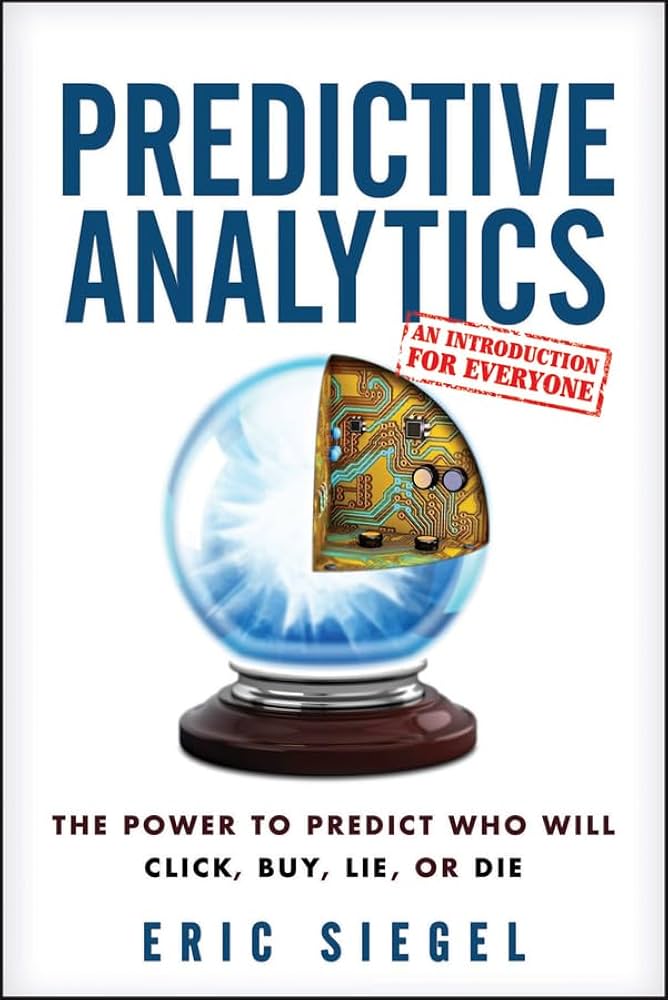
One of the most useful ideas I took from Eric Siegel’s Predictive Analytics is deceptively simple: start with the outcome, then work backward.
That sounds obvious, but in enterprise ML it is still countercultural. Many teams begin with what is technically exciting: a new architecture, feature pipeline, or model benchmark. If the design starts from model capability instead of business outcome, teams can spend months improving something that never changes a decision, workflow, or P&L line.
I strongly agree with Siegel’s framing because I have seen this failure mode repeatedly. Smart data scientists and ML engineers build advanced systems, yet adoption stays low and business impact remains unclear. The initiative is then labeled “not ready,” when the real issue was upstream: it was never anchored to a concrete operational decision.
A practical six-step reverse design
The spirit of the six-step approach in the book is to move from business value backward to technical execution. In practice, I use a sequence like this:
- Outcome: What measurable business result are we trying to improve?
- Decision: Which recurring decision influences that outcome?
- Action: What action will people or systems take when the model scores high vs low?
- Workflow: Where does that action live in existing operations, tools, and ownership?
- Data: What data is available at decision time, with acceptable quality and latency?
- Model: Given all of the above, what model class and deployment pattern are fit for purpose?
This order is not anti-technology. It is pro-effectiveness. It makes technical choices sharper because constraints become explicit early.
Why advanced models still fail in large organizations
In enterprise environments, ML usually fails for operational reasons, not mathematical ones. Common patterns:
- No decision owner: Everyone likes the dashboard, nobody owns the decision.
- No action path: Predictions are generated, but no one knows what to do next.
- No timing fit: Output arrives after the business window is already closed.
- No incentive alignment: Teams are measured on local KPIs that conflict with model-led actions.
- No trust pathway: Stakeholders see a score but not enough context to act confidently.
Notice that none of these are solved by a 2-point lift in AUC.
A contrarian view: “good enough” models often outperform brilliant ones
A contrarian idea I now hold strongly: in most enterprise contexts, a good-enough model embedded in workflow beats a state-of-the-art model floating outside workflow.
I have seen simpler models create far more value because they were legible, stable, and tied to operating routines. They were easy to explain, quick to ship, and simple to monitor. Teams trusted them, used them, and improved them iteratively.
By contrast, highly complex models often fail socially before they fail statistically. If users cannot understand intervention logic, if legal/compliance cannot evaluate risk, or if operations cannot react in time, the model’s theoretical quality becomes irrelevant.
Another contrarian point: sometimes the right answer is not to deploy an ML model yet. A rule-based policy, a segmented experiment, or better instrumentation can generate faster value and cleaner learning. That is disciplined sequencing.
Industry examples where outcome-first wins
Consider three common enterprise examples:
1. Marketing budget allocation
Outcome-first means defining decision cadence and channel guardrails first, then building the model to support that rhythm. This improves adoption by finance and marketing leaders.
2. Customer support automation
Instead of starting with “deploy an LLM agent,” start with metrics such as reduced handling time and maintained resolution quality. Often, the highest value comes from narrow workflow automation and human-in-the-loop checkpoints.
3. Churn prevention
Churn models fail when high-risk lists are sent without intervention design. Outcome-first starts with retention levers first, so each score maps to a real action pathway.
What changed in my own stakeholder work
One lesson from working with business stakeholders: technical excellence earns attention; operational clarity earns commitment.
When I shifted project framing from “model performance” to “decision economics,” conversations improved immediately. Leaders engaged more because tradeoffs were visible: expected uplift, cost of intervention, failure thresholds, and ownership by function.
A practical change that helped: every ML initiative now has a one-page decision contract before modeling begins. It defines outcome metric, action owner, intervention playbook, cadence, and rollback conditions. This single artifact prevents a lot of “impressive but unused” work.
Final reflection
The hardest part of enterprise ML is not training models. It is redesigning decisions.
Siegel’s outcome-first logic remains one of the clearest antidotes to innovation theater in AI programs. If we start from measurable business outcomes and work backward with discipline, we increase the chance that ML becomes an operating capability, not a slide deck capability.
For teams that feel stuck, my recommendation is simple: before the next model sprint, ask one question—what decision will change on Monday morning because this model exists? If the answer is unclear, pause. Clarify the outcome, then build backward.